

Ensuring your digital logbook meets German tax office requirements is crucial for tax savings. Learn expert tips for Fahrtenbuch App Finanzamt compliance.
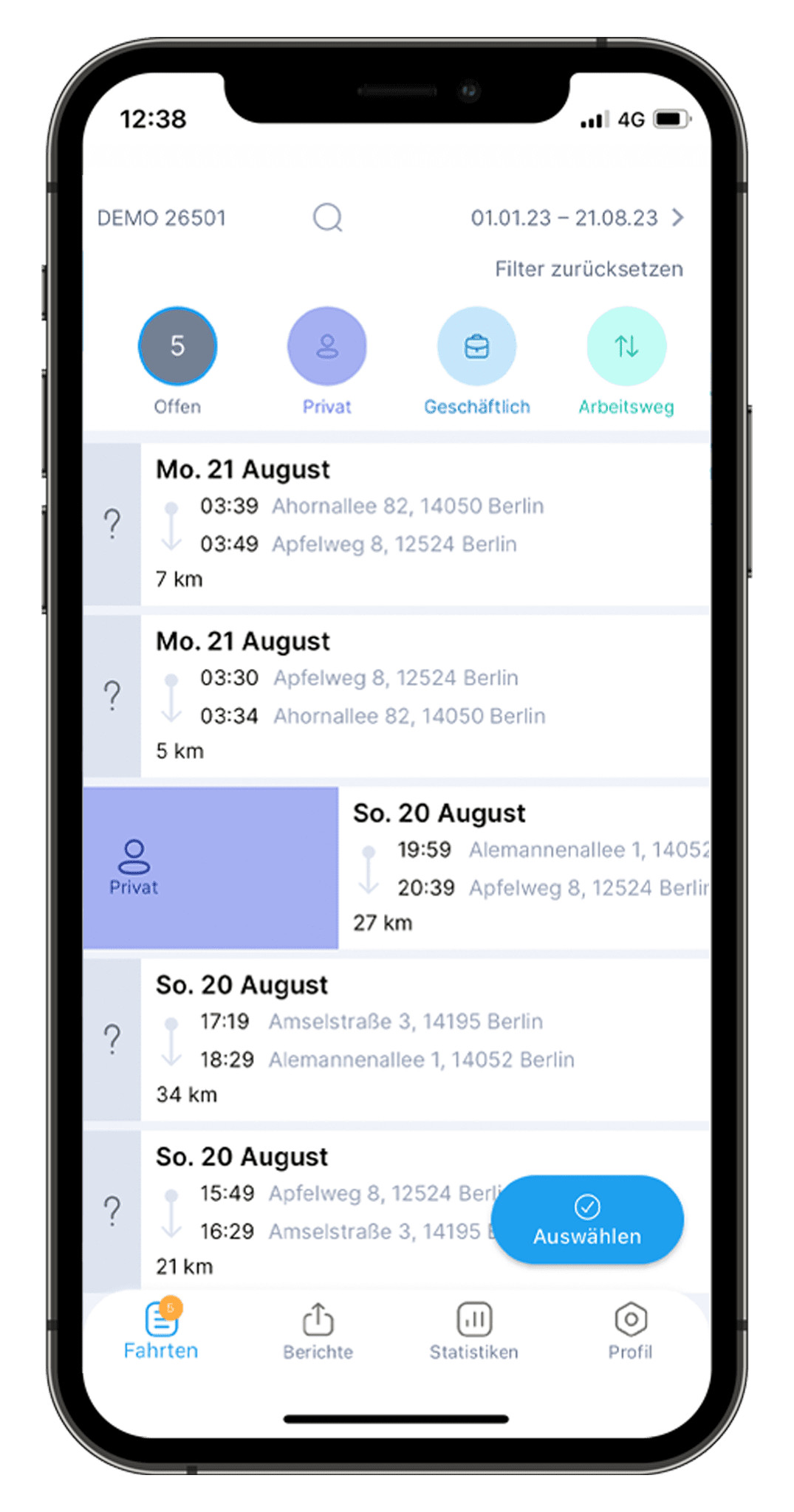
The intricacies of German tax law, particularly concerning vehicle expense deductions, often present a significant hurdle for businesses and self-employed individuals. A meticulously kept vehicle logbook, or “Fahrtenbuch,” is essential for claiming actual car costs rather than the flat-rate 1% method. Modern digital solutions, specifically logbook apps, offer efficiency but demand strict adherence to tax office (Finanzamt) regulations. My experience working with numerous clients through audits and tax declarations has shown that while convenient, not all Fahrtenbuch App Finanzamt solutions are created equal when it to compliance. Understanding the specific requirements is paramount to avoid potential issues with the German tax authorities.
Overview
- Digital logbook apps must be tamper-proof and chronologically complete.
- Every trip requires specific data points: date, time, mileage start/end, destination, purpose.
- Private and business trips need clear differentiation and detailed explanations.
- The German tax office expects data to be unchangeable once recorded.
- Proper export functions in an audit-proof format (e.g., PDF, CSV) are crucial for submission.
- Data integrity and secure archiving are non-negotiable for long-term compliance.
Core Requirements for Fahrtenbuch App Finanzamt Recognition
When selecting a digital logbook app, the fundamental principle is its ability to provide an audit-proof record. The German tax authority, the Finanzamt, demands that entries are made promptly and are unalterable after saving. This means no retroactive changes should be possible without clear indication or logging of such modifications. Any app that allows easy editing of past trips without a robust change log will likely be rejected. My direct interactions with tax auditors confirm this strict stance. The app must also automatically record mileage accurately. GPS-based tracking, coupled with start and end odometer readings, forms the backbone of reliable data capture. Manual entries, while sometimes necessary, should be the exception, not the rule. The system must capture the date and time of each journey, the starting and ending addresses, and a precise description of the trip’s purpose. For business trips, stating “client meeting” is often insufficient. A more specific description, like “Meeting with Client Müller, project X, address Y,” is typically expected. For private trips, “private journey” is usually adequate. Missing or inconsistent data is a red flag. Many apps now offer automated categorization or pre-defined routes, which can streamline the process significantly. However, users must verify the accuracy and completeness of these automated entries. Neglecting this oversight can lead to significant problems during a tax audit. The goal is to replicate the meticulousness of a paper logbook in a digital format, ensuring your Fahrtenbuch App Finanzamt data stands up to scrutiny.
Practical Application of Your Fahrtenbuch App Finanzamt
Effective use of a logbook app involves more than just installing it. Consistency is key. Every single journey, whether business or private, must be recorded. Leaving out short trips, even private ones, can compromise the entire logbook’s validity. I’ve seen situations where minor omissions invalidated months of careful record-keeping. Always start and end your recording accurately. Many apps use GPS, but it’s wise to double-check initial and final odometer readings occasionally, especially after software updates or if you switch devices. Categorizing trips correctly is vital. Business travel demands specific details, while commuter journeys have different tax implications than purely private trips. Ensure the app clearly differentiates these categories. For example, travel between your home and primary workplace in Germany is generally not a business trip in the traditional sense for logbook purposes; it’s considered commuting. However, a trip to a client site or another business location away from your primary workplace is a business trip. Pay attention to how the app handles these distinctions, as the Finanzamt scrutinizes them closely. Regularly back up your data. While most reputable apps store data in the cloud, having your own periodic export provides an extra layer of security. This preparation is especially valuable if you are ever asked to submit your logbook for review. Some businesses in the US also face similar stringent record-keeping needs for vehicle expenses, though the specific regulations differ. Always ensure your chosen Fahrtenbuch App Finanzamt meets all current regulatory standards.
Avoiding Common Mistakes with Your Digital Logbook
One of the most frequent errors users make is failing to maintain the logbook continuously. Gaps in entries, even for a few days, can render the entire logbook invalid. The Finanzamt views gaps as a sign of potential manipulation or incomplete records. Another common pitfall is insufficient detail for business trips. Simply writing “business” is never enough. The exact business purpose, contact person, and specific destination are mandatory. Generic descriptions will lead to questions and potentially rejection of your claimed expenses. Incorrect start and end odometer readings are also problematic. This can happen if the app isn’t consistently active or if there are GPS inaccuracies. Regularly cross-referencing the app’s recorded mileage with your vehicle’s odometer is a simple but effective preventive measure. Many individuals forget to explicitly mark private trips. While these trips do not need extensive detail, marking them clearly as “private” is essential for proper accounting and differentiation from business use. Lastly, not using a certified or recognized app is a significant risk. Although the Finanzamt does not officially “certify” apps, certain providers have established a reputation for tax compliance and often offer features specifically designed to meet German requirements. Choosing a generic mileage tracker without these specialized functions can lead to substantial issues during an audit. It is imperative to verify that your chosen Fahrtenbuch App Finanzamt handles data according to German fiscal guidelines.
Data Security and Archiving for Fahrtenbuch App Finanzamt Compliance
Data security and the long-term archiving of your digital logbook records are crucial aspects that often get overlooked. The German tax code requires retaining business records, including vehicle logbooks, for ten years. This means your chosen Fahrtenbuch App Finanzamt solution must facilitate secure, unalterable storage for this extended period. Simply relying on an app provider’s cloud storage might not always be sufficient. You need to ensure you can export your data in a format that is universally readable and cannot be easily modified, such as a PDF or an uneditable CSV file, for your own archiving purposes. My recommendation is to perform these exports periodically, perhaps quarterly or annually, and store them securely on your own system. This provides a robust backup should anything happen to the app or its provider. Data protection is another critical element. Ensure the app complies with GDPR regulations, especially since it collects sensitive location data. Understand where your data is stored and who has access to it. Reputable providers will outline their data handling policies clearly. During an audit, you will likely need to present your logbook in a structured, legible format. A good app will offer clear reporting functions that summarize your trips, clearly differentiate between private and business use, and provide all the necessary data points required by the tax authorities. The ability to generate such reports efficiently can significantly streamline the audit process and demonstrate diligence.
About the Author
